Palestine – A leader in the Palestine Liberation Organization warned of pressures aimed at transferring the services provided by the United Nations Relief and Works Agency for Palestine Refugees in the Near East (UNRWA) to host countries, considering that the financial crisis facing the agency has political dimensions and is fabricated, aimed at undermining its role and existence.
The director of the UNRWA file in the Palestine Liberation Organization, Kanaan al-Jamal, stated in a statement followed by the Video News Agency that what the agency is facing represents a "existential threat," warning of the repercussions of efforts aimed at ending its role, and the potential targeting of the rights of Palestinian refugees and their cause.
Al-Jamal added that nearly 90% of the crisis facing UNRWA is fabricated and politically motivated, pointing out that the financial and administrative pressures on the agency come in the context of attempts targeting the Palestinian refugee file and their rights.
He confirmed that transferring UNRWA services to host countries would place additional burdens on these countries and raise concerns about the future of basic services provided to Palestinian refugees, in addition to its repercussions on the agency's status and role in caring for their affairs.
He added that the cancellation of its services would be "a humanitarian and national disaster par excellence," noting a severe financial crisis currently estimated at more than $70 million.
Pressures and Risks
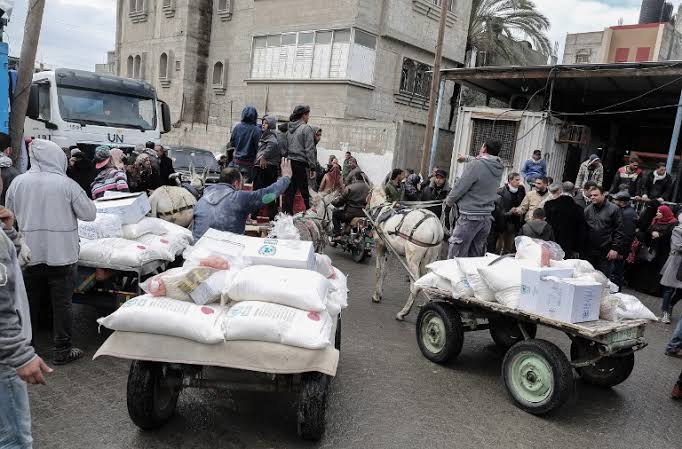
Regarding the crisis' implications, he warned of negative effects on the services provided to Palestinian refugees, especially in the devastated Gaza Strip, including health, educational, and relief services that the majority of the Palestinian people in Gaza rely entirely on UNRWA services.
He indicated that the financial crisis also threatens the existence of employees and the continuity of operations for UNRWA in all five of its operational areas: the West Bank, including Jerusalem, Gaza, Jordan, Syria, and Lebanon.
He spoke of threats to dismiss more than 6,000 employees, which means that thousands of families dependent on them would be left "up in the air," especially with the difficult economic situation in the West Bank and Gaza Strip on one hand, and on the other hand, the cessation of services provided by these employees.
He mentioned reports about a plan to close the only hospital in Qalqilya in the Middle East run by UNRWA, after it shut down the internal medicine and maternity departments in this hospital in March.
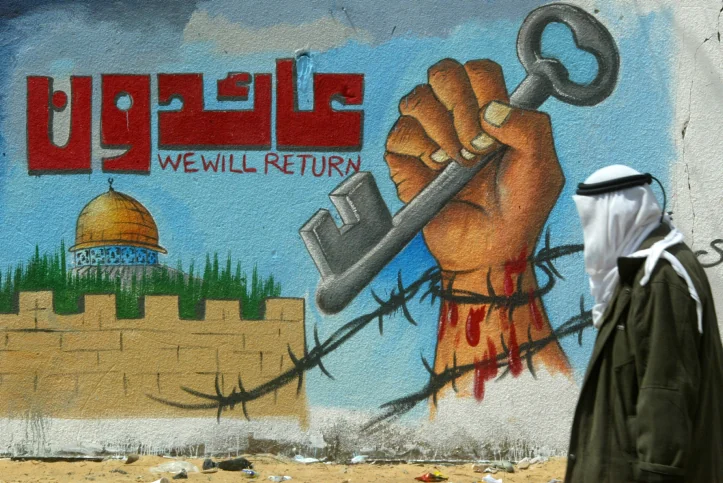
He also considered that transferring UNRWA services to the Palestinian Authority and host countries is "politically forbidden," as it negates the rights of Palestinian refugees and the right of return and the entire refugee file, which includes more than 6 million and 547 thousand refugees.
Warning and Disaster
He addressed the targeting of the agency from several angles and laws recently approved in the Israeli Knesset related to destruction in Gaza and the West Bank including Jerusalem, where schools and health and educational centers were closed, and camps in northern West Bank such as Jenin, Nur Shams, and Tulkarm were destroyed.
In addition to American and Israeli pressures on some donor countries that are reducing or stopping their support until UNRWA becomes unable to fulfill its obligations.
It also includes preventing it from bringing in all logistical supplies and all materials intended for entry into the Gaza Strip.
The leader in the Palestine Liberation Organization spoke about pressures exerted on the Palestinian Authority and some donor countries to transfer some services provided by UNRWA to them, with inducements of providing funds that were previously given to UNRWA to carry out these tasks, warning: "This is a political danger and is absolutely unacceptable."
He concluded with a warning that the significant and rapid deterioration in UNRWA operations negatively impacts security stability in the West Bank, Gaza Strip, and the region, stating, "If Palestinian refugees are left without medical, health, and educational services," adding: "If UNRWA services are canceled, the situation will be catastrophic, and it will be a humanitarian, national, and political disaster par excellence."