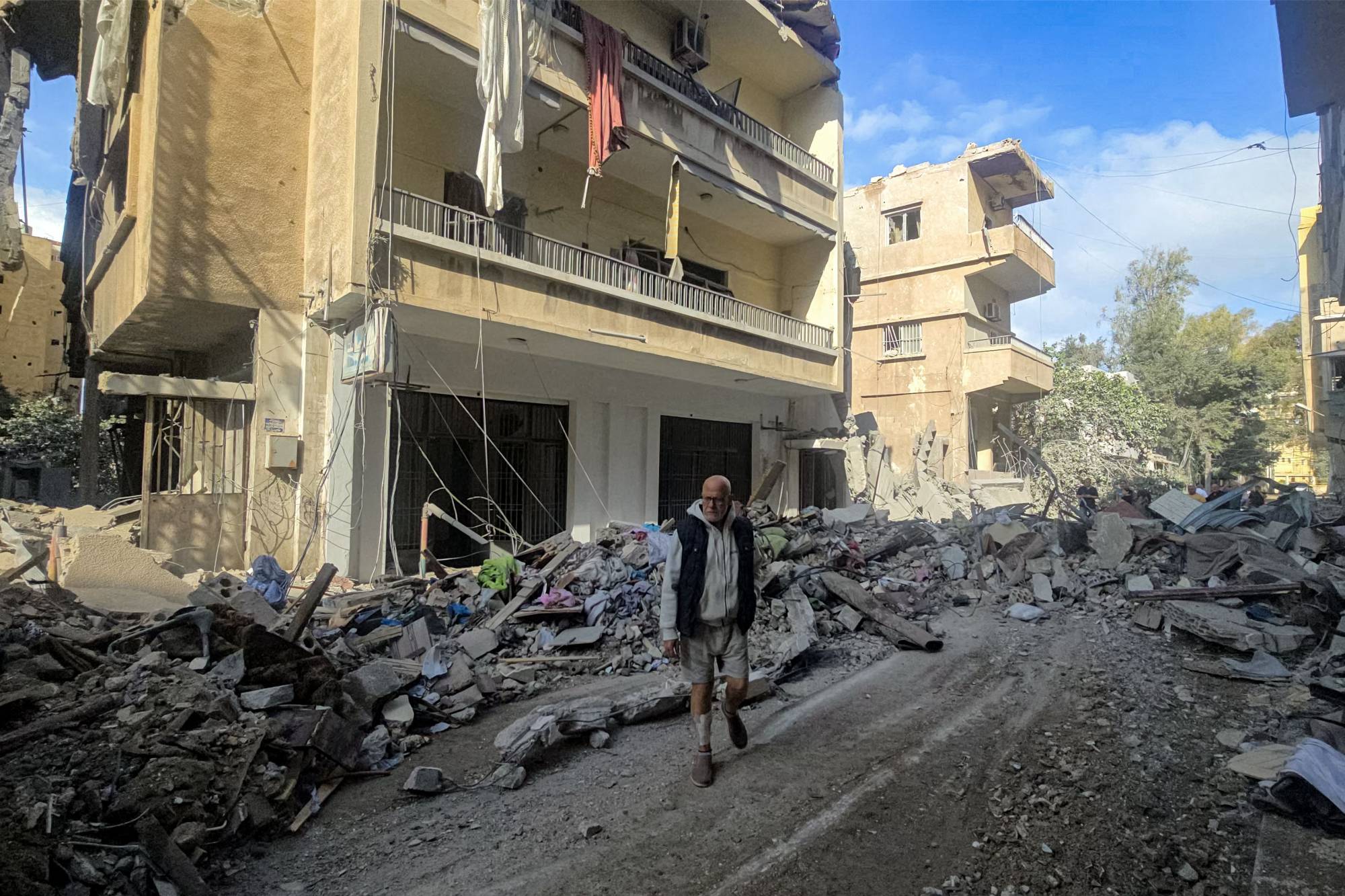
The elderly man Najib Farhat returned to the rubble of his house in the town of Barashit in southern Lebanon, searching among the stones and debris for his books that had scattered due to an airstrike by the Israeli occupation that destroyed the house, leading to the loss of his personal library that included more than two thousand books he had collected over many years. Only torn works were left, along with others he was trying to salvage before the rain ruined them.
Farhat, during his daily attempts to rescue what remains of his library, was digging by hand through the rubble searching for the books that survived the destruction, and moving what he found to other places for safekeeping, in an attempt to regain part of a cultural and family heritage that his children grew up among its shelves.
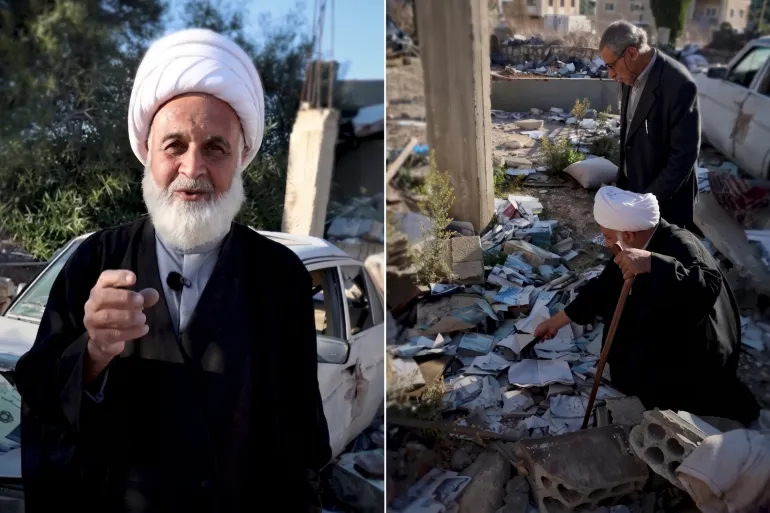
Najib Farhat stated that he has become accustomed to returning daily to his ruined home to look for the books that remained under the rubble, explaining that the Israeli airstrike did not only destroy the walls of the house but also damaged a large part of his library that had accompanied him throughout his life.
In this context, the National Network for the Protection of Libraries and Cultural Heritage in Lebanon documented the targeting of at least 18 public and private libraries during the war, including the municipal library of Bint Jbeil, which housed more than 15,000 books, and the municipal library of Taybeh, with prior destruction of libraries belonging to scholars such as Muhammad Hussein Fadlallah and Jaafar Murtada.
Farhat clarified that he is focusing his efforts on extracting the undamaged or repairable books, while other works have turned into scattered and torn pages, making it difficult to collect or restore them after being exposed to destruction.
He recalled with sadness the moments and feelings he experienced when he found a book containing the memoirs of his father, the poet Najib Farhat, torn among the debris in one of the losses that left a mark on him.
He added that he also attempted to salvage some of his own works that remained somewhat intact and moved them to a safe place, preserving what is left of his intellectual and literary output, affirming that his library was not just a collection of books but included historical, religious, political, and educational works that formed a source of knowledge throughout his cultural and professional journey, especially since he had previously worked in teaching.
He noted that his children grew up among the library shelves and became accustomed to reading and benefiting from its books, which made the loss transcend its material value to losing part of the family's memory and history.
The recent rains have exacerbated the damage to the remaining works under the rubble, causing several of them to deteriorate and their pages to tear, prompting him to intensify his attempts to save the books before the rains return.
He emphasized his determination to rebuild his library concurrently with the reconstruction of his home, confirming that he looks forward to restoring it in a better condition than it was before, despite the losses that have affected its contents.