The United States has long engaged in wars and military interventions in the Middle East for decades, claiming to protect its strategic interests, ensure the flow of oil, and support its allies in the region, specifically “Israel,” using its military in an attempt to overthrow undesirable regimes and rulers.
In this regard, “Foreign Policy” magazine published an article by Stephen Walt, a professor of international relations at Harvard University, in which he stated that the American-Israeli war against Iran marks the end of a century of great power intervention in a Middle East that is becoming master of its own fate.
The author cited American politician Steve Simon as saying that Washington's dreams of “changing” the Middle East have failed in the past and are failing today, and if it continues on this path, it will continue to fail, and “he is right, but I don’t think we will continue these efforts, nor will anyone else. On the contrary, we are approaching the end of a century or more in which external powers dominated events in the region even when they failed to achieve their main objectives.”
Walt states that for the first time since 1919, the future of the region will be primarily determined by local actors themselves.
Hence, the failed American-Israeli war against Iran is a “transformative” event but is merely accelerating developments that have been clear for some time; Middle Eastern countries will increasingly rely on themselves.
Walt says that the modern Middle East has largely emerged due to external great powers, as victorious allies from World War I carved out new countries from the collapsing Ottoman Empire at the Paris Peace Conference in 1919, after making numerous contradictory promises to various warring parties during the war itself.
Britain and France governed what is now known as Lebanon, Iraq, Palestine, Syria, and Jordan during most of the interwar period under mandates from the League of Nations, but the populations therein were increasingly resentful even before the outbreak of World War II, which prevented European powers from maintaining control.
Saudi Arabia gained its independence on its own, while Britain provided security for smaller Gulf states. The effective support from different external powers, notably the United States, played a crucial role in the establishment of Israel in 1948. Britain and the United States conspired to overthrow Iran’s democratic government in 1953.
The Soviet Union's decision to send arms to Egypt and Syria in the mid-1950s contributed to the outbreak of the Suez Crisis in 1956, transforming the Middle East into a pivotal battleground in the Cold War.
Over the following thirty-five years, the United States and the Soviet Union armed their allies and overthrew (or attempted to overthrow) regimes they deemed hostile, sometimes intervening directly, albeit mostly on a limited scale and for short periods.
The United States and the Soviet Union also cooperated to impose ceasefires to end the recurring wars between Israel and its neighbors; however, the joint efforts aiming to establish a broader regional peace were continually sacrificed on the altar of great power competition.
Nevertheless, Walt argues that the end of the Cold War did not put an end to great power intervention, with the one change being that the United States began to act alone. The first Bush administration led the coalition that expelled Iraq from Kuwait in 1991, hosted the Madrid Conference in 1991, and took the initiative on the Oslo peace process, mishandling it.
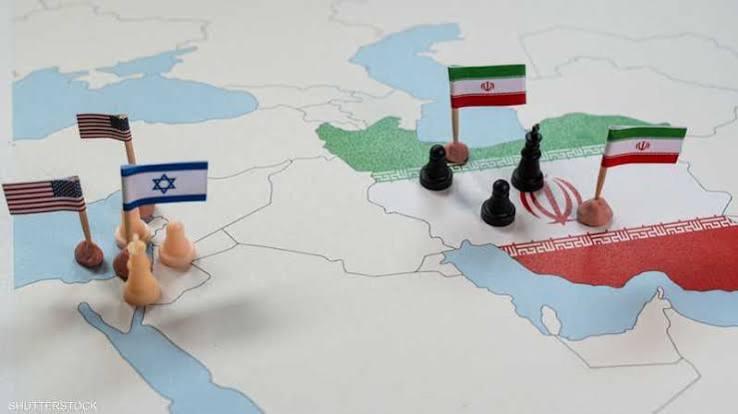
It also adopted the dual containment strategy that helped pave the way for the September 11, 2001 attacks, then attempted to reshape the entire region by overthrowing Saddam Hussein in 2003. We all know how that misguided adventure ended.
The current war launched by President Trump against Iran may witness the final moments of this arrogant endeavor, while Netanyahu plays the role of the cheerleader, a role he first took on in 2002. Unfortunately, his predictions back then were no better than his forecasts for 2026.
Walt states that the Iran war revealed, like a flash of lightning, the new strategic landscape. It demonstrated the limits of what external military power can achieve, as seen from the failed American interventions in Iraq and Libya, alongside Russia’s inability to prevent the ousting of Syrian President Bashar al-Assad.
Similarly, Iran’s ability to withstand decades of American pressure, its possession of a massive arsenal of missiles and drones, as well as its mastery of the nuclear fuel cycle, further underscores the diminishing effectiveness of external intervention.
Despite generous funding, the Saudi military has been unable to achieve victory over the Houthis in Yemen through bombing, and repeated and increasingly aggressive Israeli attacks on its adversaries did not prevent Hamas from launching a major attack in October 2023, nor did they completely eliminate Hamas or Hezbollah.
In short, Walt says that even before the war with Iran, the limits of military power, especially when wielded by states from outside the region, have become clear.
It also adopted the dual containment strategy that helped pave the way for the September 11, 2001 attacks, then attempted to reshape the entire region by overthrowing Saddam Hussein in 2003. We all know how that misguided adventure ended.
The current war initiated by President Trump against Iran may witness the final moments of this arrogant endeavor, while Netanyahu plays the role of the cheerleader, a role he assumed for the first time in 2002. Unfortunately, his predictions then were no better than his predictions for 2026.
Walt argues that the Iran war unveiled, like a flash of lightning, the new strategic landscape. It revealed the limits of what external military power can accomplish, demonstrated by the failed American interventions in Iraq and Libya, alongside Russia's inability to prevent the ousting of Syrian President Bashar al-Assad.
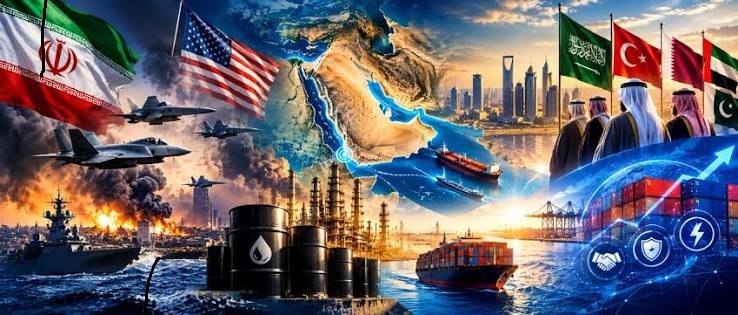
Similarly, Iran’s ability to withstand decades of American pressure, possessing a vast arsenal of missiles and drones, along with mastering the nuclear fuel cycle, further confirms the diminishing effectiveness of external intervention.
The Saudi military has not been able to achieve victory over the Houthis in Yemen through bombing, and repeated and increasingly aggressive Israeli attacks on its adversaries did not prevent Hamas from launching a major attack in October 2023, nor eliminate Hamas or Hezbollah.
In summary, Walt states that even before the war with Iran, the limits of military power, especially when utilized by foreign states, have begun to clarify.
He notes that Iran may be sharply divided internally and its government may be unpopular, but the occupations of Iraq and Afghanistan should have taught Americans by now that attempting to invade and control a country with a population of over 80 million is a very bad idea.
In conclusion, the days when great powers could intervene in the Middle East with near-total impunity, as the United States did during Operation Desert Storm in 1991, are behind us.
The author observes a second trend in the decline of the great powers' ability to determine the fate of the Middle East, which is the energy that has primarily concerned these powers and will reinforce the first trend.
He notes that this may seem strange at present, given the sharp increase in fuel prices due to the war, but most of these increases are due to limited refining capacity (a problem exacerbated by the Iranian war and the war in Ukraine), not due to a shortage of crude oil supplies themselves.
The relative importance of energy in the Middle East has significantly decreased since 1973, when a Saudi-led boycott caused prices to skyrocket and led to long lines at gas stations in the United States.
Since then, the shale fuel boom in the United States and broader global efforts to combat climate change by reducing fossil fuel consumption have made Middle Eastern oil less critical than it once was.
For this reason, Middle Eastern countries, such as Saudi Arabia and the United Arab Emirates, are seeking to diversify their economies, as they recognize that the days of relying on oil and gas exports to cover all expenses are quickly fading.
The author emphasizes that he is not saying that energy supplies (and fertilizers) from the Middle East are unimportant, “but I merely say they will be much less important in the future than they were in the past,” thus “the need for intervention in the region to protect energy exports will diminish, while the costs of trying to do so will increase.”
Combining these two trends makes direct military intervention by external powers much less attractive.
Thus, for the first time in over a century, we can envision a Middle East where its people primarily determine its fate, rather than external actors.
However, great powers will still engage with various Middle Eastern countries, such as selling arms, seeking investments, and making trade agreements, etc., but local governments will take the initiative. What can we expect them to do?
Walt answers: “I expect many traditional power-balancing policies, where ideologies and sectarian differences are not considered, and the need to curb the stronger powers will drive the formation of a constantly changing set of regional alliances.”
At the same time, this pattern paves the way for renewed efforts to reduce tensions between Iran and Saudi Arabia and other Gulf states, perhaps even to negotiate a broader security arrangement for the region that does not rely on support from great powers.
The United States will revert to its previous role as an external balancing power, will reduce its military presence there, and will seek more practical relations with all countries in the region instead of “special relations” with a few.
In other words, America will act like China; if external powers are no longer willing or able to provide protection, Middle Eastern countries will be more inclined to possess a nuclear deterrent, and the danger of preemptive wars to thwart such efforts is likely to increase.
One might also speculate on how these developments will affect the domestic policies of some of these countries; if Middle Eastern nations must largely rely on their own resources and strategies for security and defense, they will need to improve their capacity to assemble a real military force rather than merely purchasing large amounts of expensive military equipment from foreign defense contractors.
But as King Farouk of Egypt or King Faisal II of Iraq might tell you, building more effective military forces is fraught with risks in societies run from the top down by elite classes, because their power guards may wish to have more influence over how things are managed.