The story of the giant tortoises in the Galápagos Islands began with pirates. Since the sixteenth century, sailors began arriving at these islands, followed by whalers, which contributed to determining the fate of hundreds of thousands of tortoises that lived in the archipelago.
According to experts, giant tortoises reached Galápagos from South America around two to three million years ago. Ironically, their exceptional ability to survive became their greatest weakness, as they can live for up to a whole year without food or water. Therefore, sailors would take them aboard their ships.
Jorge Carrión, director of environmental conservation at the Galápagos Conservancy, an organization that has been protecting the archipelago since 1985, said, "When these people wanted to eat, the tortoises were there and ready, and they had fresh meat."
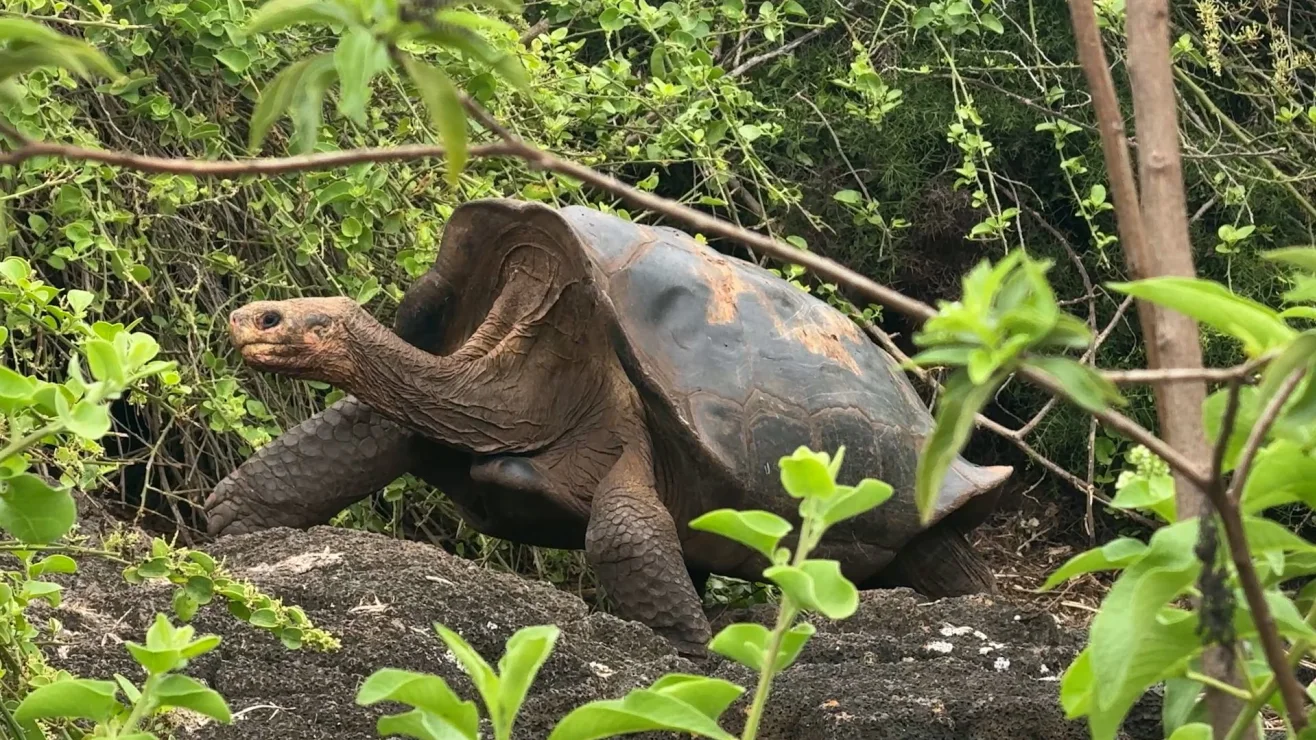
In just two centuries, between 100,000 and 200,000 tortoises disappeared from these islands, which were visited by Englishman Charles Darwin in 1835 aboard the Beagle on a voyage that later played a significant role in the development of his theory of evolution.
The Galápagos giant tortoises do not belong to a single species; each island has its own unique species of tortoise that adapted to its environment over time. Some have become completely extinct due to hunting and the introduction of invasive species by humans.
The Floriana tortoise was the first species to go extinct, around 1850. It was characterized by a distinctly saddle-shaped shell, which is a very rare trait.
Discovery of "space tortoises" on a remote volcano
In 2000, during a mission to Wolf Volcano, the highest point in Galápagos, located in the northern part of Isabella Island, researchers found tortoises with unusual shells for the area. Scientists initially called them "weird tortoises" because they did not know their origin, according to James Gibbs, vice president for science and environmental conservation at the Galápagos Conservancy and a professor at New York State University.
Blood samples were taken from them and sent to geneticists at Yale University. After additional studies that extended for years, the analyses showed that these tortoises carry genes belonging to the extinct Floriana lineage.
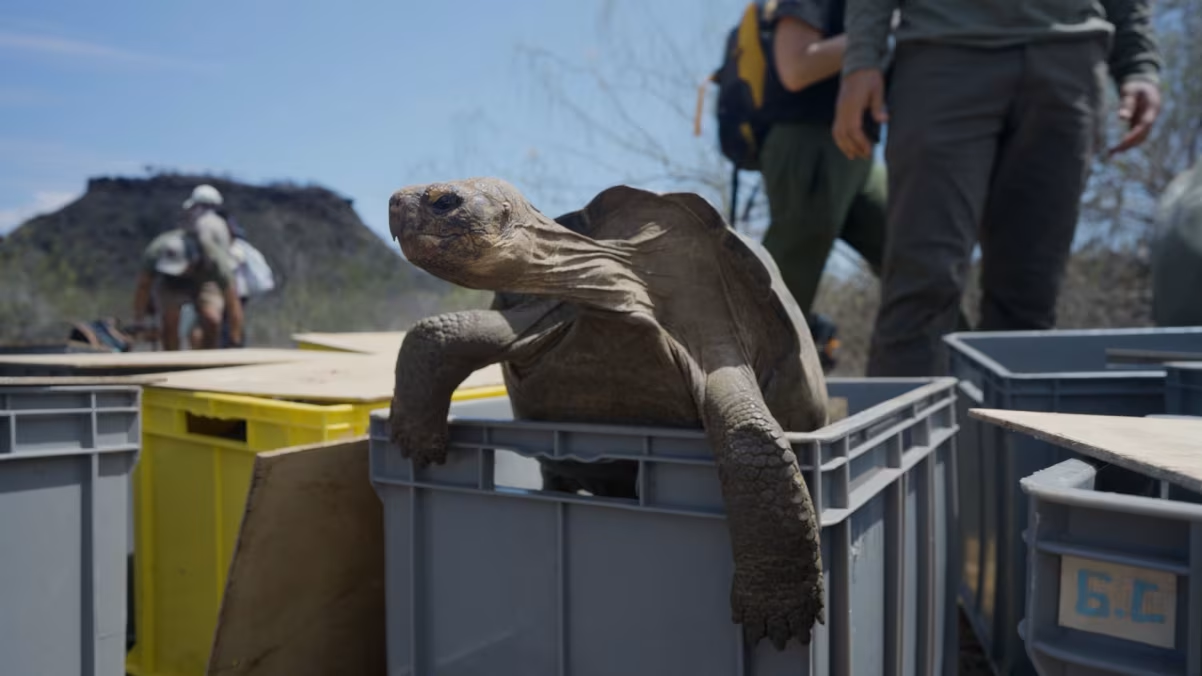
But how did the Floriana tortoises arrive at a distant volcano on another island? There are two hypotheses. The first is that floods may have naturally transported them between the islands. However, scientists believe that humans are the more likely explanation.
Pirates and whalers would transport dozens or hundreds of tortoises on their ships, and there may have been an accident near Wolf Volcano, or they might have thrown some tortoises there to lighten the load of the ships before entering the Pacific Ocean.
From incubator to returning to nature
Since 1965, the Fausto Llerena Center for breeding land tortoises has been working to protect these giant reptiles. Nineteen tortoises from the Floriana lineage were transported to it after their discovery at Wolf Volcano for care and breeding.
The staff collects the eggs or obtains them from the tortoises that breed in captivity, then weighs them and places them in incubators.
Interestingly, temperature determines the gender of the young; at around 29.5 degrees Celsius, females develop, while incubators set at 28 degrees Celsius produce males.
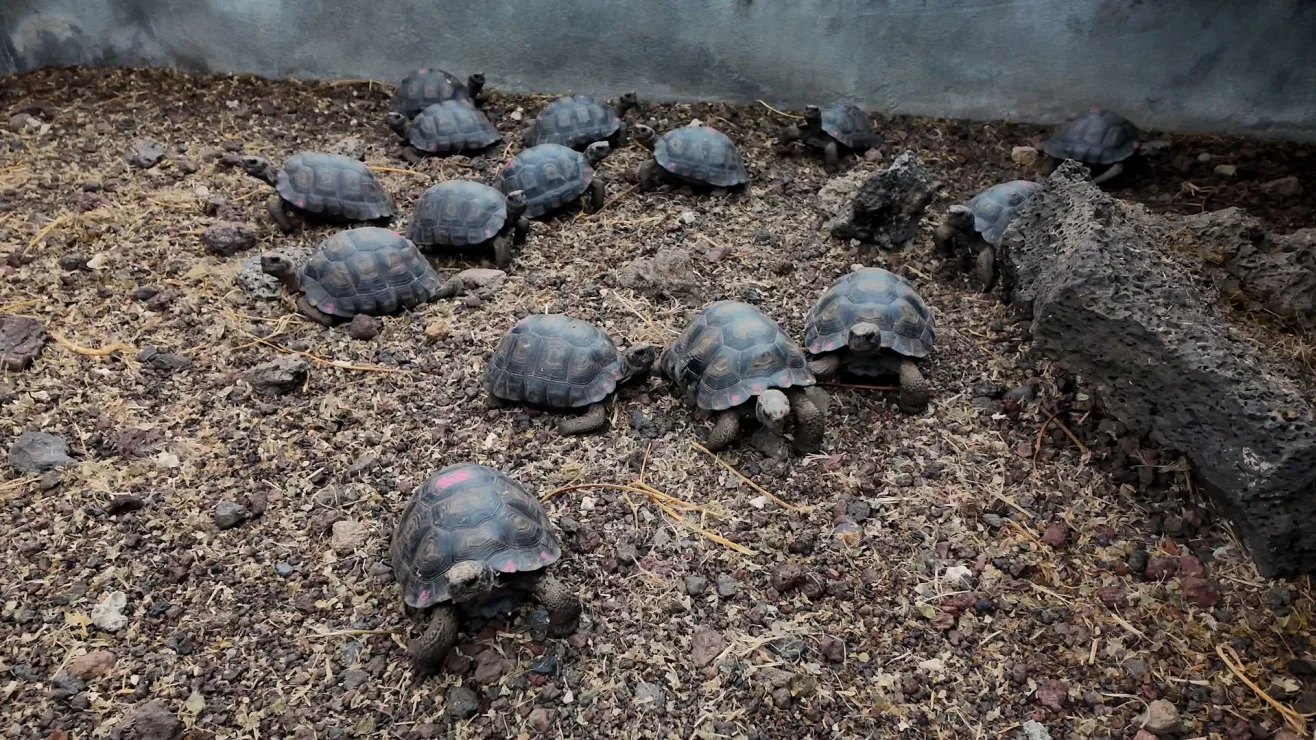
After four months, the eggs hatch. The hatchlings are transferred to dark, humidity-controlled boxes for a month, where they feed on their yolk sac, mimicking what happens in the wild. After that, they are placed in enclosures and fed on chopped plant leaves. During their early years, they require strict protection as their length does not exceed eight or nine centimeters, making them easy prey.
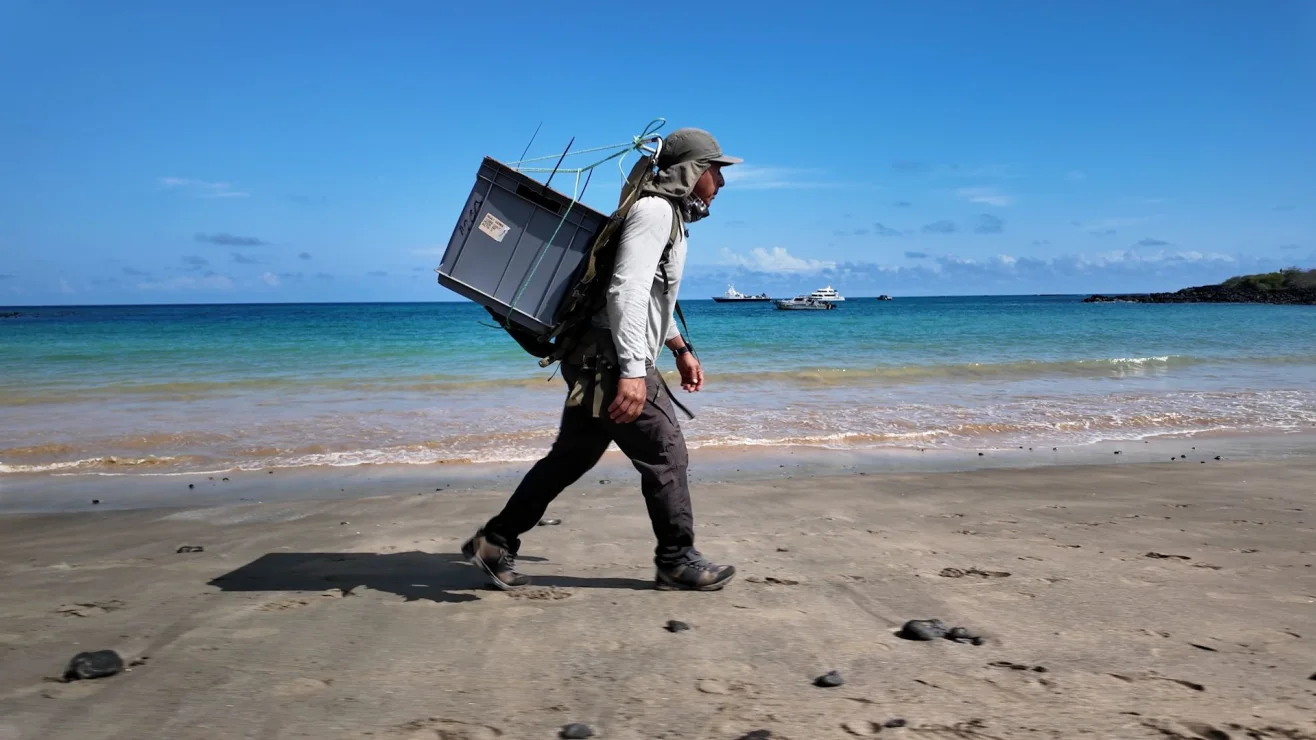
In February 2026, 158 young tortoises were released on Floriana Island and were equipped with satellite tracking devices. Scientists also utilized resources from NASA to determine the best locations for their release and the places where they could breed in the future.
Breeding programs have achieved remarkable success, as the tortoises discovered more than twenty years ago have adapted well to captivity and produced about 800 young tortoises, with an expectation that they will continue to produce dozens of offspring annually.
However, the tortoises returned to Floriana are hybrids, carrying a mix of genes from the original Floriana tortoises and those from Wolf Volcano. Scientists have not yet found a pure Floriana tortoise, but they believe that some may still live in the volcano, especially since these animals can live for over a hundred years.
Ecosystem engineers
Giant tortoises are described as "ecosystem engineers." They consume massive amounts of vegetation and transport seeds over long distances through their digestive systems. The process of digesting food can take about a month, during which time the tortoise can travel several kilometers, thus distributing seeds in new areas. Additionally, their weight, which can reach about 400 kilograms, allows them to trample through vegetation and create openings that benefit other species.
Galápagos is characterized by exceptional biodiversity, as about 80% of its land birds and 97% of its reptiles and terrestrial mammals do not naturally exist anywhere else. The islands' isolated location, about a thousand kilometers from the Ecuadorian coast, has allowed species to evolve separately from the mainland.
Study of the tortoises
Over the past sixty years, collaborative conservation efforts from the government, organizations, and local communities have successfully bred more than 9,000 giant tortoises and returned them to the wild.
However, full recovery will take a long time. Here lies the lesson offered by these tortoises: patience and perseverance. They grow slowly, but they are steadfast and tenacious and can live for decades. As in the fable of the tortoise and the hare, slowness does not mean failure. The incredible resilience of these animals has allowed humanity to repair part of the damage caused over the centuries.