The process of sorting the votes for the Knesset elections in Israel continues - which took place on Tuesday - amid preliminary results placing Prime Minister Benjamin Netanyahu's camp in the lead, followed by the opposition camp led by Gadi Eisenkot, and then the Arab lists that managed to secure around 19 seats.
Winning in these elections requires Israeli political parties or their camps to obtain a majority of 61 seats out of 120 to control the Knesset and form the next government, something that none of the participating parties have managed to achieve so far.
According to an announcement from the Central Elections Committee, counting 85.6% of the votes resulted in Netanyahu’s camp obtaining 53 seats, compared to 48 seats for Eisenkot’s camp, and 19 seats for the Arab parties.
With no camp decisively securing a majority, the Joint Arab List finds itself - for the first time in decades - at the heart of the power equation in Israel, rather than on its margins. Will the opposition camp succeed in collaborating with it to oust Netanyahu? Or will the latter manage to turn the political scene in his favor? And has Israel reached a scenario of "political deadlock"?
Scenario One: Alliance with the Opposition
The voter turnout for Arab (Palestinian) voters in the Israeli elections reached about 80%, which is unprecedented in the country’s history, which has recently witnessed a noticeable increase in racism and attacks against Arabs.
In this context, head of the Joint List and leader of the Arab Movement for Change, Ahmad Tibi, believes that Arab voters' turnout reflects the desire of the Arab public for a radical change to the painful reality they face in Israel under Netanyahu’s leadership and the far-right camp.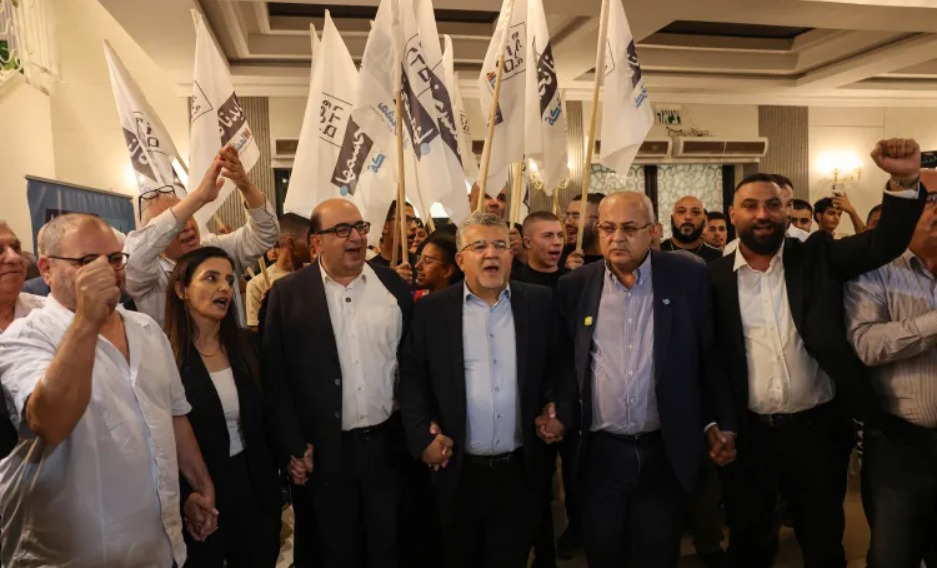
Tibi stated in a statement reported by the Video News Agency that the position of the "Joint List" is a necessity to oust Netanyahu and pave the way for an alternative government, noting that the first parliamentary step that the list is preparing to take is to oust Knesset Speaker Amir Ohana and vote for an opposition candidate.
Tibi explained that the Joint List needs to identify the opposition candidate and their positions to support them, adding that "this situation will create a new condition in the Knesset that limits Netanyahu's power and that of the Likud party and the right, and gives parliamentary strength to the opposition camp today, which is what the opposition should also do."
The head of the Joint List called on opposition leader Eisenkot to exhibit enough courage to form a government that ousts Netanyahu within two weeks, considering this a feasible possibility in light of around 66 members opposing Netanyahu in the Knesset, and that the opposition camp is in contact with them to coordinate the change of the Knesset speaker, in addition to discussing future cooperation, stressing that the Arab bloc awaits Eisenkot to present his political program before securing their support.
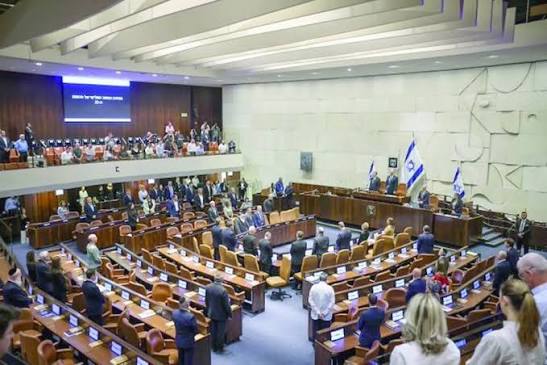
For its part, the Israeli Broadcasting Authority quoted the head of the National Democratic Assembly, Sami Abu Shahada, saying: "We condition our cooperation with Eisenkot on him stopping the incitement against us," adding that Eisenkot has a majority to form a government, but his racism is what prevents him from doing so.
Despite the outstretched hand that Tibi and his bloc are waving to topple the current far-right government, the obstacle may not be in Netanyahu alone. Channel 12 reported that sources stated that at least four members of Eisenkot's camp expressed - during an internal session - their absolute objection to forming a minority government relying on the Arab parties.
This means that even if Eisenkot decides to ally with the Joint List, his decision might face opposition from within his own camp, which could hinder the chances of ousting Netanyahu from power.
Scenario Two: Alliance with Netanyahu
If the Joint List fails to ally with the opposition camp, it has another option to reach out to Netanyahu to participate in forming the next government.
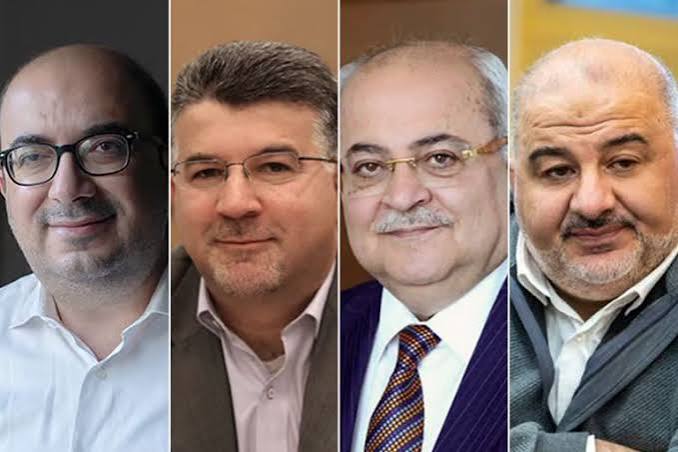
However, this scenario seems unlikely, as several Arab officials have confirmed their rejection of Netanyahu's continued governorship, with the head of the Arab Joint List, Yusuf Jabareen, stating that they are "ready and prepared to pave the way for the ousting of Netanyahu's government," a position also emphasized by both Tibi and Abu Shahada.
On the other hand, Netanyahu's camp has shown no desire to ally with the Joint List, as the Prime Minister continuously incited against Arab votes and their legitimacy throughout the election period, even going so far as for his party (Likud) to claim that the elections were "stolen" by the Arab lists that seek to "destroy the Jewish state," in his words.
In this context, Likud stated that it will provide the police, the Shin Bet, and the elections committee with hundreds of proofs of electoral fraud in Arab polling stations, calling for the security service to investigate this matter.
As for Netanyahu, he incited Israelis against the Arab bloc saying: "We should not jeopardize Israel by forming a government based on anti-Zionist Arab parties."
Scenario Three: Not Participating in Forming the Government
If neither of the previous scenarios can be achieved, the Arab list may find itself excluded from the equation of government formation, faced with two options it has long strived to prevent: heading towards a national unity government between Netanyahu and Eisenkot, or having Netanyahu remain at the helm of a caretaker government.
According to Tibi, Netanyahu may resort to a national unity government scenario to prevent Eisenkot from forming a government for the change bloc, which threatens to topple Netanyahu and his extremist government ministers such as National Security Minister Itamar Ben Gvir and Finance Minister Bezalel Smotrich.
In this regard, Tibi noted - during an interview with Al Jazeera - that U.S. President Donald Trump supports the idea of a "national unity government," and has informed all parties of this.
However, if Eisenkot - who previously served as Chief of Staff of the Israeli military - refuses to form a national unity government or ally with the Arab parties, Israel may face a scenario of "political deadlock," with Netanyahu remaining at the head of a transitional caretaker government before heading to new elections next March.
Thus, all eyes remain on Israel in the coming hours until the final results of the Knesset elections are revealed: Will the opposition camp ally with the Arab parties - despite the differences between the two sides - to oust Netanyahu, or will the latter remain in power?