MOSUL, IRAQ —
Walking through the narrow, winding alleyways of Mosul’s Old City, the air
carries a distinct blend of limestone dust, fresh concrete, and the unmistakable
aroma of freshly baked khubz. Just years ago, this historic district along the
western bank of the Tigris River stood as a catastrophic landscape of
rubble—the tragic epicenter of the final battle to liberate the city from ISIS
occupation in 2017. Today, it is becoming one of the Middle East’s most
ambitious stories of urban restoration and cultural reclamation.
Centuries of
layered history define Mosul’s Old City. Famous for its unique Islamic
architecture, intricate alabaster carvings, and multicultural heritage, the
district was historically home to a vibrant tapestry of Muslim, Christian,
Jewish, and Turkmen communities. When war devastated nearly 80% of its
structural footprint, international observers feared the physical soul of
ancient Mesopotamia had been permanently erased.
However, a
coordinated global and local initiative has turned the tide from ruin to
renewal.
A Blueprint for
Cultural Reconstruction
The cornerstone
of the district's physical recovery is spearheaded by UNESCO’s flagship
initiative, "Revive the Spirit of Mosul," launched in partnership with
the Iraqi government, international donors, and local institutions. Rather than
imposing modern architectural models, conservators are utilizing traditional
building techniques, local marble, and recovered original stonework to preserve
the district's authentic identity.
Key landmarks
anchoring the restoration efforts include:
The Al-Nuri Mosque
Complex & Al-Hadba Minaret: Once the city's iconic defining symbol, the
12th-century "hunchback" minaret and its accompanying mosque are
being meticulously reconstructed using historic fragments dredged from the
debris, combined with traditional mudbrick masonry.
Historic Churches
of Al-Tahera and Al-Saa'a: Symbolizing Mosul's ancient religious diversity,
these sites are undergoing comprehensive structural stabilization, backed by
international expertise and local artisans.
Traditional
Courtyard Houses (Hosh): Characterized by internal open-air courtyards and
heat-resistant Mosul marble, hundreds of residential properties are being
rebuilt to welcome displaced families back to their ancestral neighborhood.
Economic
Resilience and Local Heritage
Beyond the
physical bricks and mortar, the economic engine of the Old City is quietly
starting to hum again. The historic Al-Saffareen (Coppersmiths) Market and
traditional souks are witnessing the return of craftsmen, shopkeepers, and
street vendors. Youth-led non-governmental organizations and community
collectives have taken a central role in organizing cultural festivals, art
exhibitions, and heritage tours, redefining Mosul’s narrative on the global
stage.
Challenges remain
significant. Intricate unexploded ordnance clearance, complex property
ownership verification, and infrastructure modernization—such as sewage and
power grid integration within narrow passages—continue to test municipal
capacities.
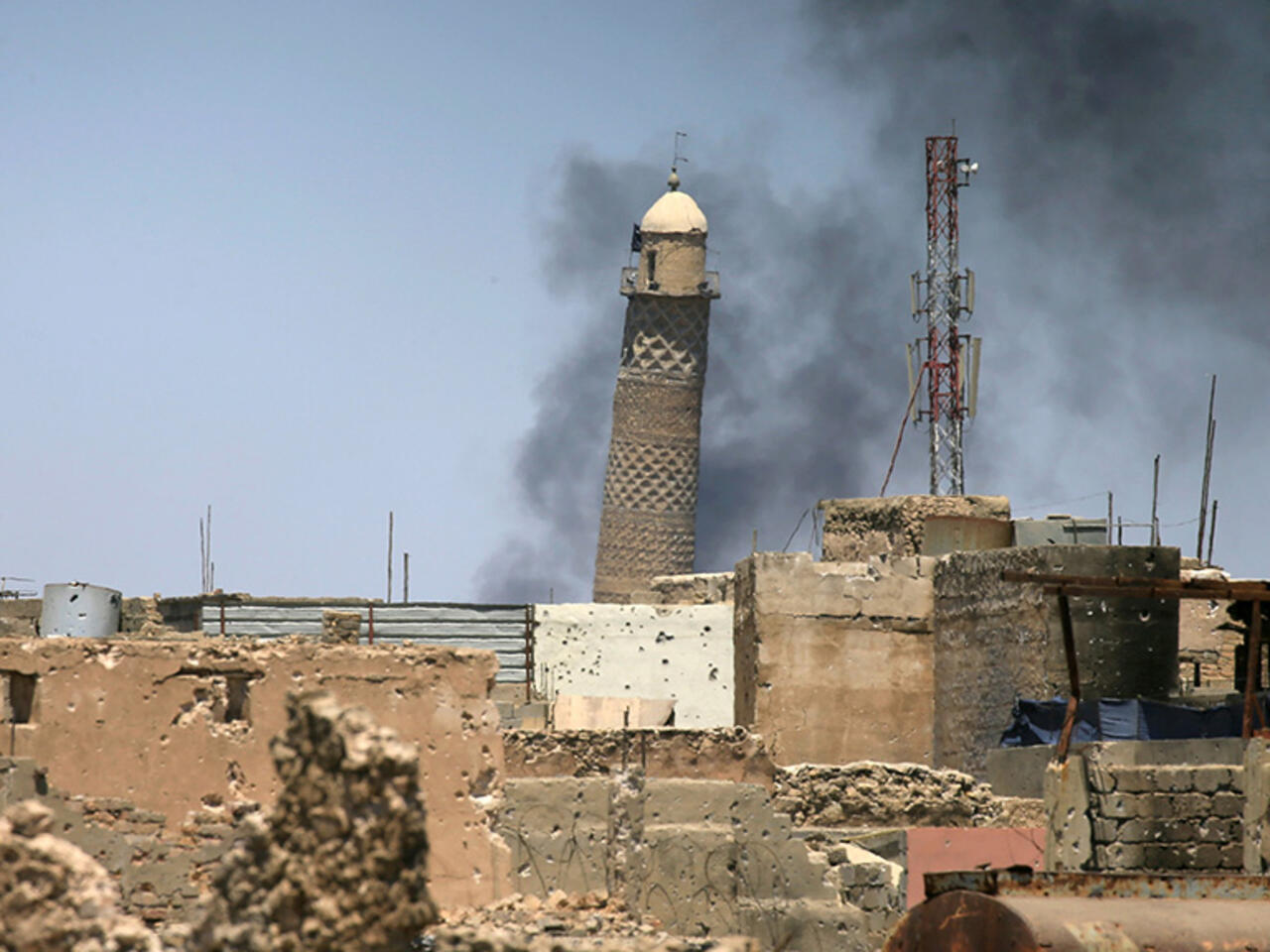
The bombing of the Al-Nouri Mosque and the historic Al-Hadba minaret in western Mosul
Yet, urban
planning experts note that the Old City of Mosul is setting a global precedent
for heritage-led post-conflict recovery. It stands not merely as a construction
site, but as a living testament to human resilience, where history is actively
being saved by the people who call it home.