PECIAL REPORT |
ENVIRONMENT & GLOBAL HERITAGE
NASIRIYAH, IRAQ —
Spanning the lower floodplains of the Tigris and Euphrates rivers, the
Mesopotamian Marshes—famously known as the Ahwar of Southern Iraq—stand as one
of the most culturally significant and ecologically fragile wetland systems in
the world. Inscribed as a UNESCO World Heritage site, this vast region, often
historically associated with the biblical Garden of Eden, is facing a
compounding crisis driven by regional water management disputes, severe
climatic shifts, and accelerating environmental degradation.
A Living Legacy: Ancient Roots and Ecological
ValueFor over five millennia, the wetlands have sustained the Ma'dān, or Marsh
Arabs, whose unique lifestyle remains closely aligned with the natural rhythms
of the delta. Utilizing native giant reeds (Phragmites australis), the
community constructs architectural structures known as Mudhifs—guesthouse halls
built entirely without nails or timber—and maintains traditional livelihoods
based on water buffalo herding, artisanal fishing, and reed harvesting.
Ecologically, the
Ahwar serve as a crucial biodiversity sanctuary across the Middle East.
Comprising major wetland zones such as the Hawizeh, Central, and Hammar
marshes, the region functions as a vital resting stop for millions of migratory
birds traveling between Eurasia and Africa. It provides key habitat for
vulnerable and endemic species, including the Basra Reed Warbler and the
Smooth-coated Otter. Furthermore, the wetlands act as a natural flood-control
buffer and dynamic water filtration ecosystem for southern Iraq.
Historical Trauma
and Modern Vulnerabilities
The ecological
integrity of the marshlands has suffered repeated shocks over recent decades:
1990s
Anthropogenic Drainage: Under the former regime, extensive civil engineering
projects diverted river waters away from the wetlands, draining roughly 90% of
the marsh ecosystem to target opposition forces, which displaced hundreds of
thousands of indigenous residents.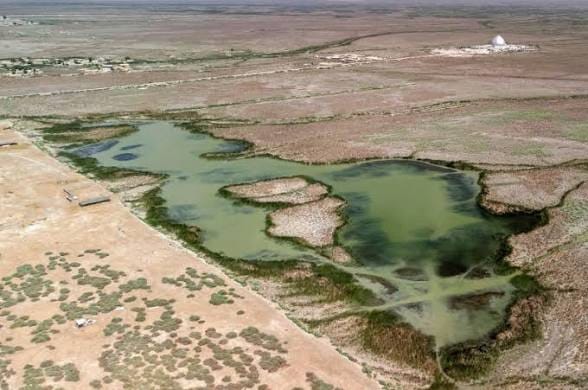
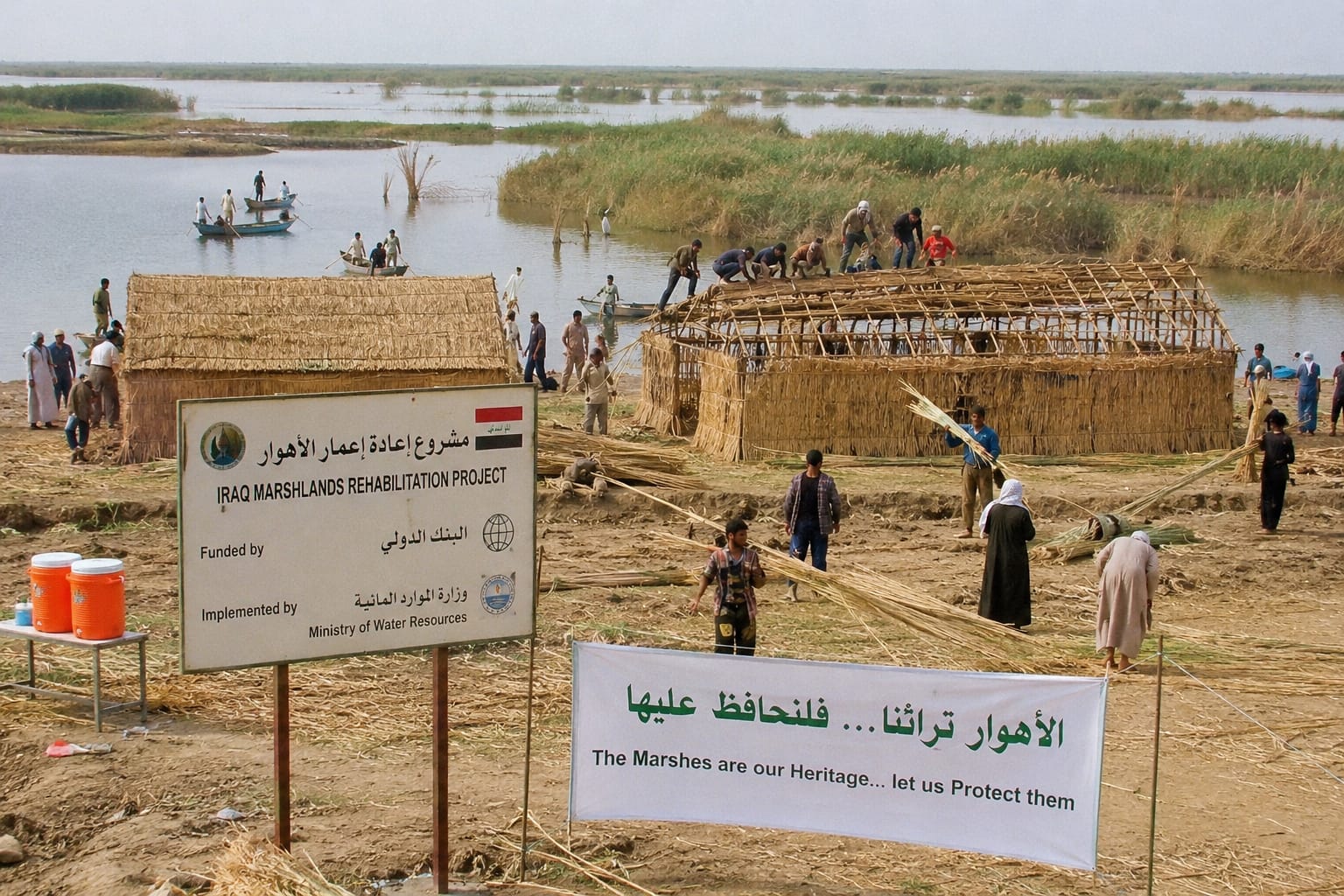
Post-2003
Restoration: Local communities breaches dams and dykes to re-flood the land,
initiating a partial recovery supported by international environmental agencies
and culminating in its 2016 UNESCO designation.
Upstream
Hydro-Infrastructure: Intensive dam construction and agricultural diversions
upstream in Turkey, Syria, and Iran have significantly restricted natural water
inflows into both the Tigris and Euphrates rivers.
The Multi-Front
Crisis: Climate Change and Water ScarcityInternational environmental
assessments classify Iraq among the nations most vulnerable to climate change.
The convergence of prolonged regional droughts, declining precipitation, and
rising average temperatures has exacerbated water deficits in the southern
marshes.
The drop in water
volume has caused Total Dissolved Solids (TDS) and salinity levels to rise
sharply. The resulting lack of potable water and feed has decimated buffalo
herds, while dwindling fish stocks have severely undermined the local economy,
accelerating rural-to-urban migration toward nearby urban centers like
Nasiriyah, Basra, and Amarah.
Innovations in
Restoration and International Action
In response to
the growing ecological crisis, international development institutions and local
organizations are implementing targeted, nature-based initiatives.
Among these
efforts are constructed wetland projects launched by international aid bodies
alongside Iraq's Ministry of Water Resources. These systems utilize natural
reed-bed filtration to treat municipal wastewater before it enters dried marsh
basins. By removing pollutants and restoring dissolved oxygen levels, these
initiatives offer low-cost solutions for improving water quality and supporting
wildlife recovery in targeted areas.
Outlook and
Policy Imperatives
While localized
interventions offer functional models for ecosystem management, scientists and
international observers emphasize that long-term preservation of the
Mesopotamian Marshes requires structural policy measures:
1. Transboundary
Water Agreements: Establishing formal regional water-sharing frameworks to
guarantee minimum ecological flows from upstream source countries.
2. Modernized Water
Infrastructure: Upgrading domestic agricultural irrigation networks across Iraq
to minimize water loss and optimize delivery.
3. Protected Status
Enforcement: Implementing comprehensive conservation policies to shield
UNESCO-designated zones from industrial pollution and unmanaged oil extraction.
Without sustained
international support and binding regional water agreements, the unique natural
and cultural heritage of the Mesopotamian Marshes remains at high risk of
permanent degradation.