In ancient Chinese culture, the number 5 is not just a passing figure; it is associated with what is known as "the five blessings," which are considered a completion of a lucky life: longevity, wealth, health and peace of mind, virtue, and a natural end after a long life. However, the number that carries all these positive connotations may acquire a completely different meaning when it comes to U.S. President Donald Trump and his relationship with China.
While the "five blessings" refer to a balanced and complete life, five heavy headlines gather in front of Trump in relation to Chinese President Xi Jinping, ranging from trade and rare earth minerals to artificial intelligence and Taiwan. Meanwhile, the U.S. war with Iran adds another file to the intertwining interests between Washington and Beijing, making the number 5 this time seem more like a herald of political doom than a symbol of luck.
This paradox is the lens through which The Economic Times chose to analyze the relationship between Trump and Xi, referencing the Chinese concept of (Wufu) or "the five blessings" against a backdrop of heavy issues that continue to complicate the relationship between the two largest economies in the world.
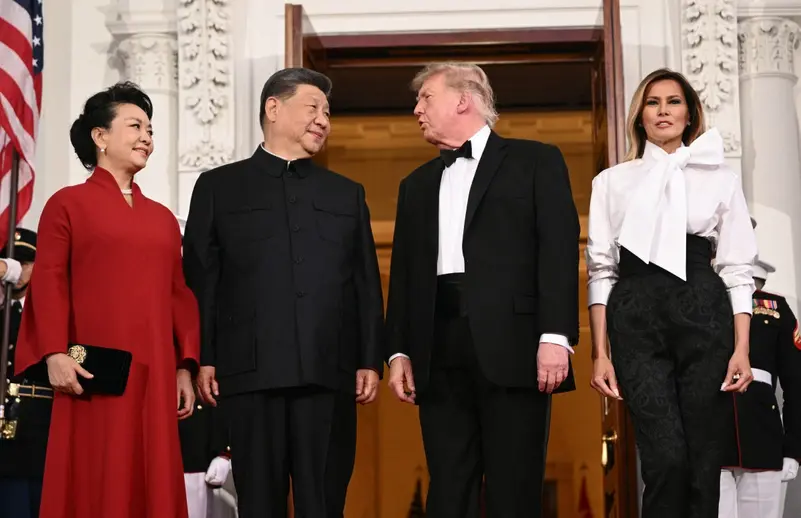
Despite what the recent summit demonstrated in terms of understanding, several key issues have not been definitively resolved, leading the relationship to be based more on managing disagreements and containing escalation than on resolving outstanding issues, according to the newspaper.
At the forefront of these issues is trade, which has seen the fiercest rounds of escalation between Trump and Beijing in recent years before both sides again moved towards de-escalation and seeking temporary arrangements.
Negotiations include tariffs and Chinese purchases of American products, alongside broader arrangements regarding bilateral trade, while the risk of renewed tension looms with the expiration of agreed-upon periods for de-escalation unless temporary agreements turn into more stable accords.
As for rare earth minerals, they carry a different sensitivity; these elements are essential in technology, energy, and defense industries, while China holds a pivotal position in their extraction, processing, and supply chains.
Washington is striving to reduce its dependence on Beijing in this sector, but building alternative supply chains is not quick, giving China a significant bargaining chip in any economic or technological confrontation between the two countries.
With artificial intelligence, competition between Washington and Beijing has entered a level more connected to national security and technological superiority, with each side seeking to protect its advanced capabilities and prevent the other from gaining a decisive advantage.
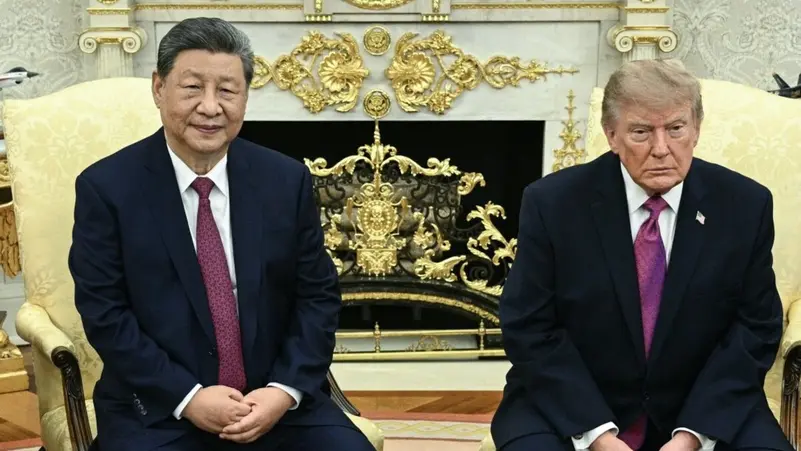
The disagreement here is not only about companies and markets; it extends to advanced chips, computing capabilities, data, and potential military applications, making any technological understanding between the two countries linked to broader calculations than mere trade.
Next is Taiwan, a file that is difficult to separate from the military and strategic dimension of the U.S.-China relationship.
Beijing considers the island part of its territory and opposes any moves toward its independence, while Washington maintains unofficial relations with Taiwan and provides it with military support, making the future of the island one of the most sensitive issues in regional and international security calculations.
However, the relationship between Trump and Xi does not move solely within the bounds of the Pacific Ocean; Iran has also become part of the interwoven calculations between Washington and Beijing, especially with the U.S.-Iran war linked to energy security, maritime corridors, and global trade.
During the meeting between Trump and Xi, the Iranian file entered the discussions, with the Chinese side affirming its support for the diplomatic pathway between Washington and Tehran, while the two presidents also discussed the issue of the Iranian nuclear program and the security of international waterways, amidst the ongoing repercussions of the war on energy markets and trade.
Here, the paradox of the number 5 becomes clearer; what the "five blessings" symbolize in Chinese culture as completion and balance appears in the relationship between Trump and Xi more like five intertwined arenas that are difficult to separate from one another.
Trade intersects with rare minerals, technology is linked to national security, Taiwan has a military dimension, while Iran and energy security alongside maritime corridors introduce a new geopolitical dimension to a relationship that Washington and Beijing are trying to keep under control without eliminating fundamental disagreements.
Thus, the number 5 in Trump's calculations this time may not be a number of blessing, but rather a "nightmare" troubling him with the scale of the unresolved files between Washington and Beijing, and the fine line between both parties' attempts to extinguish a cold peace that keeps their competition away from igniting a confrontation that may not be favorable to either side.