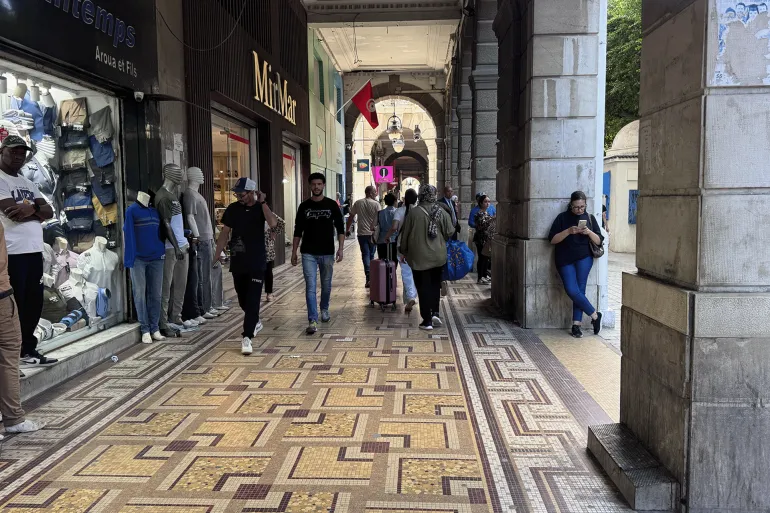
In the vegetable market, Salma, a Tunisian woman in her fifties, was not on a quest for a lengthy shopping list but rather attempting to acquire what her family's budget would allow. She paused in front of some vegetables, selecting peppers, onions, and potatoes, before continuing on her way without purchasing the rest of what she needed.
Salma states that Tunisian families have become limited to necessities, rearranging their priorities with each shopping trip since the prices of some goods have become beyond their purchasing power.
She believes that combating unemployment and supporting agriculture should be state priorities, as they are directly linked to families' ability to improve their living conditions.
In the adjacent store, Omar Al-Troudi, a vegetable seller, notes a disparity in prices between local and imported products.
While speaking to Al Jazeera Net, he mentions that the price of a kilogram of local tomatoes ranges between 5 and 6 dinars, if available in the markets, compared to about 3 dinars for tomatoes imported from Algeria, considering that heatwaves have impacted local production and contributed to rising prices.
Increase in Wage Allocations
These testimonies coincide with the Tunisian Parliament discussing the draft state budget for 2027, which raises the amount of expenditures to about 68.895 billion dinars, an increase of 8.37% compared to the 2026 budget.
However, behind these numbers lies a question that goes beyond the size of the budget: To what extent do the new financial decisions in the budget reflect on the purchasing power of Tunisians, and on social services and job opportunities?
The 2027 budget allocates approximately 27.349 billion dinars for wage expenses, compared to 25.267 billion dinars in 2026, with an increase of 8.2%. Wage costs represent about 39.7% of the budget expenditures, with plans to implement the second installment of wage increases and continue hiring.
The project also includes authorization for 30,557 hiring positions, along with 5,664 positions for regularizing the status of workers in the horticulture sector and some other public activities.
The total number of employees in public jobs and government-affiliated institutions is 692,702 individuals.
In social sectors, allocations for the Ministry of Education have increased to about 9.184 billion dinars, and for the Ministry of Health to 4.741 billion dinars, while the budget for higher education and scientific research reached 2.484 billion dinars.
Health investment allocations have also risen to 1.321 billion dinars, compared to 780 million dinars in the previous year.
However, these increases do not necessarily indicate an immediate improvement in service quality, as their impact is tied to the extent of project implementation and the provision of equipment and personnel.
Conversely, some allocations have decreased, including the budget for the Ministry of Trade and Export Development, although the decrease is limited.
Economic expert Reda Al-Skandali, in a statement to Al Jazeera Net, believes that the increase in the number of employees in the public sector reflects, alongside the needs of public facilities, the limited capacity of the private sector to absorb job seekers.
He considers that addressing unemployment cannot be achieved by governmental action alone, but requires creating an environment that allows private businesses to expand, invest, and create sustainable job opportunities.
Subsidies and Addressing Inflation... Are the Allocations Sufficient?
The draft budget allocates about 11.846 billion dinars for subsidies, which are distributed among 7.090 billion for fuels, 4.036 billion for basic goods, and 720 million dinars for transportation.
It also designates 5.091 billion dinars for social interventions, including aids and grants directed to low-income groups.
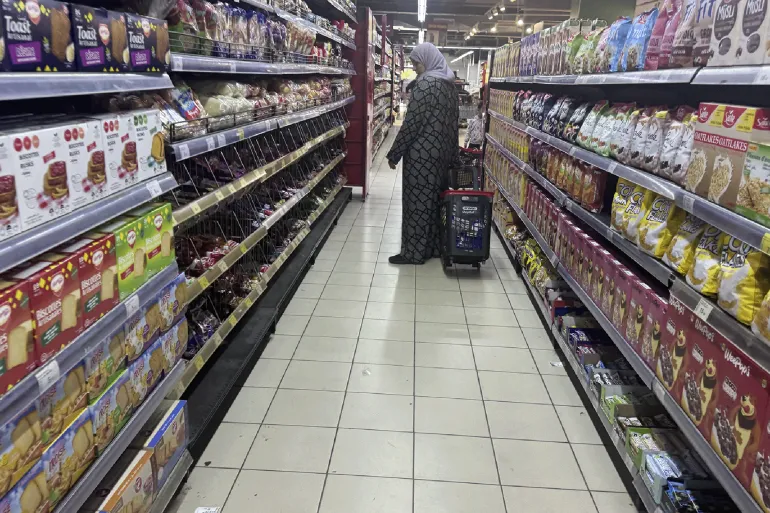
These allocations come at a time when the cost of living continues to pressure families. The inflation rate in Tunisia reached 5.6% during September 2026, while food prices increased by 8.4% year-on-year, according to data from the National Institute of Statistics.
The impact of inflation is not limited to subsidized goods; it extends to fresh products affected by production costs, transportation, and climate fluctuations. Thus, the continued allocation of large amounts for subsidies raises questions about the current system's ability to curb rising prices and ensure that assistance reaches those in need.
Social interventions include aids for needy families, grants for children, and back-to-school assistance, along with programs for individuals with disabilities.
However, these aids do not compensate for the need to improve employment and income opportunities, so that families do not remain dependent on social transfers in the face of rising living costs.
In this context, Al-Mouldi, a retired individual in his sixties who spoke to Al Jazeera Net in response to a question about his view on public spending priorities, believes that "the priority should be investing in youth and improving conditions for a dignified life, allowing new generations better opportunities for work and stability."
Small Enterprises and Taxation
The draft budget includes funding lines directed toward small and emerging enterprises, entrepreneurial students, and private companies, along with measures to support new businesses, including covering social contributions during the first three years at decreasing rates and tax exemptions for companies meeting specific criteria.
These measures aim to reduce the initiation costs for businesses and encourage economic initiatives.
However, Al-Skandali believes that the multiplicity of funding lines alone does not ensure project success unless accompanied by an evaluation of feasibility studies and monitoring of businesses' ability to repay loans.
He also raises concerns about funding private companies without interest or guarantees, warning that loan defaults could impact the banking institutions managing these finances.
On the taxation front, the draft does not propose a general change in income and corporate tax rates, but it includes adjustments in some fees. Notably, the amount allocated for travel abroad has increased from 60 to 80 dinars, and the fees on games and competitions have risen from 40% to 60%, in addition to customs and tax exemptions for certain activities and sectors.
Thus, the measures are distributed between incentives for businesses on one side and increases in certain fees on the other.
Where does the budget revenue come from?
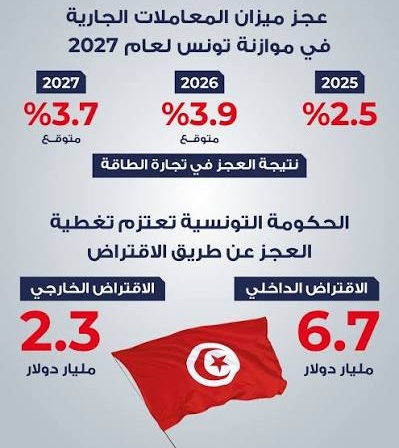
State revenues authorized for collection in 2027 are estimated at about 54.280 billion dinars, of which 49.6 billion dinars are tax revenues, against payment expenditures amounting to 68.895 billion dinars, resulting in a budget deficit estimated at 14.615 billion dinars.
The total financing needs of the treasury amount to 28.122 billion dinars, and they are not only related to covering the deficit but also include paying off the principal of public debt estimated at about 13.307 billion dinars.
To finance these needs, the draft budget relies on domestic borrowing of 19.845 billion dinars, in addition to 6.877 billion dinars from external borrowing, along with 1.4 billion dinars from other resources.
It also includes facilities from the central bank for the public treasury worth 9.8 billion dinars without interest, to be repaid over 15 years with a grace period of about three years.
Al-Skandali warns of the risks of expanding domestic borrowing and resorting to direct funding from the central bank, considering that injecting liquidity without matching additional production could increase inflationary pressures and impact the purchasing power of the dinar, as well as potentially crowd out private businesses on bank financing.
Between the budget figures and families' calculations in the markets, the challenge remains whether these options can translate public spending into better services and more stable work and income opportunities.