With the announcement by the Ministry of Education to increase the number of school days to 183 days, the concerns of Egyptian families are renewed regarding the rising costs of their children's education, at a time when the burdens of living expenses and financial commitments are increasing.
The ministry clarifies that the increase in school days has been gradual over the past few years, having reached 116 days in the academic year 2023-2024, indicating that the decision aims to provide sufficient time for explaining the curricula, amidst repeated complaints about the density of the curricula and the limited time allocated for teaching.
Despite the ministry's assurance that the step aims to improve the educational process and provide a larger time space for teachers and students, families fear that the increase in school days will lead to additional burdens, including transportation costs, meals, and expenses related to the school day, in addition to what may result from organizational and financial burdens on parents.
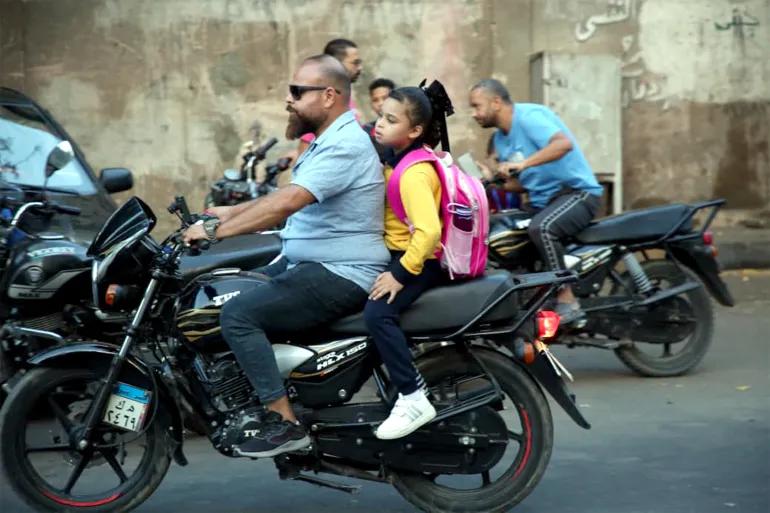
Cutbacks at the expense of education
However, parents see that increasing school days means additional burdens including transportation, food, and daily expenses, alongside the cost of schools, books, supplies, and private tutoring.
With the rising cost of education, some Egyptian families have started to take austerity measures to maintain their spending ability, including forgoing certain educational services, reducing private tutoring, and seeking cheaper alternatives, even transferring their children to other schools.
Yumna Ali, a mother of four students in various educational stages, says that the rise in school bus prices led her to transfer her children to a school close to their home. She explains to Al Jazeera Net that the cost of transporting her children used to reach 7,500 Egyptian pounds (around 146 dollars) monthly, so she decided to forgo the private transportation, and now her children walk to school.
Yumna recounts the experience of her friend Wafaa Ibrahim, who chose to keep her children in their school that is far from home but decided to reduce their attendance days to two or three a week at most, with their father taking them both ways to save on transportation costs.
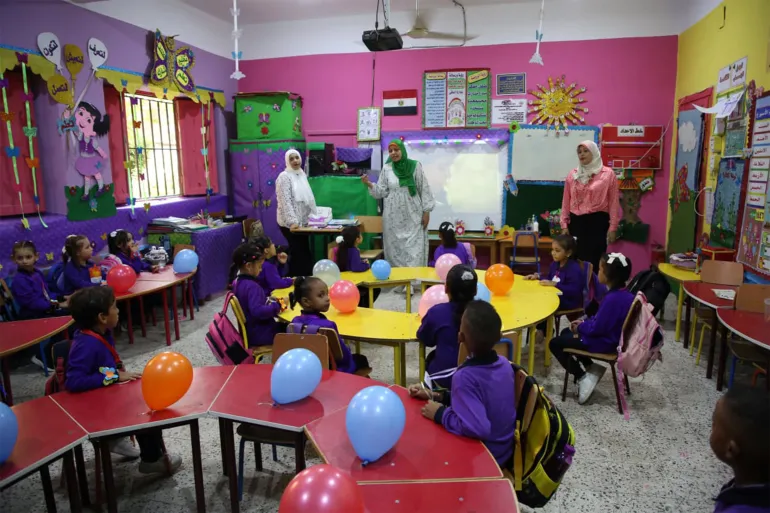
From private to public education
The measures to reduce expenses are not limited to transportation, as the increase in costs has led some families to change the type of education itself.
Ramiz Ahmed, a father of a secondary school student, says he was forced a few years ago to transfer his children from private schools to public language schools due to the continuous rise in private school fees, and he also dispensed with private transport.
Moreover, Ramiz did not stop at this cutback; he forwent expensive private tutoring and turned to group tutoring centers for some subjects and online lessons for other subjects, while he and his wife took on the teaching of some subjects to their children.
He tells Al Jazeera Net that the rising cost of living has clearly impacted his children's education, affirming that if his income permitted, he would not have had to take these measures or transfer his children from their previous schools.
Nasima Hussein says she made the same decision, transferring her three children in primary school from a private school to a public language school after she could no longer afford the fees, which she claims have increased by about 35% last year.
She adds to Al Jazeera Net that the transition to public education will save her family a considerable amount they used to spend on education, which they can no longer afford.
Increasing income
In contrast, other families have chosen to increase their income instead of changing their children's schools. Issam Ali, a father of two primary school children, explains that he had to look for an additional job to maintain the same educational level for his children at the private school.
He clarifies to Al Jazeera Net that he is proficient in German, so he started offering training courses after finishing his main job in customer service, aiming to increase his income and cope with the rising costs of his children's education.
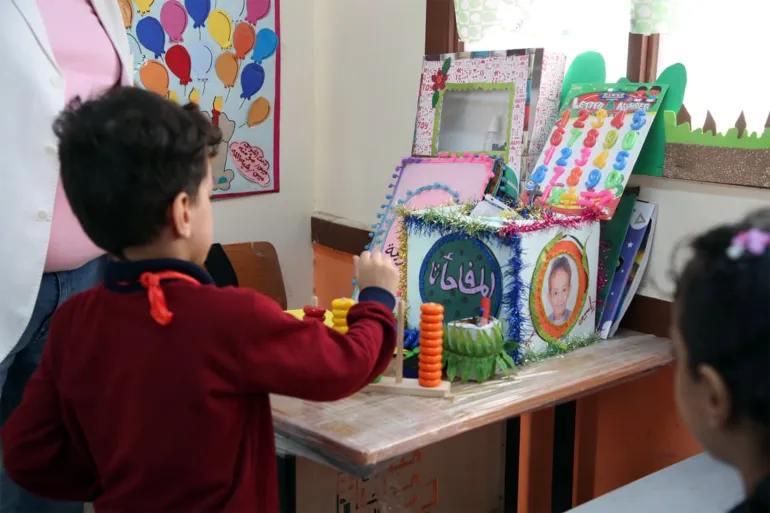
However, Abdul Rahim Ahmed, a father of two children in primary and preparatory stages, chose to reduce daily expenses related to school, stating that he decided not to send his sons to school except for two days a week.
He adds to Al Jazeera Net that the difficulty of the curricula and the abundance of exams and assessments have made private tutoring, from his point of view, a necessity for student success, which adds a new burden to the family budget.
He mentions that he tries to compensate for that by reducing other expenses, including certain types of food and entertainment.
External books... another avenue of spending
Moreover, the burdens of education do not stop at school fees and transportation and tutoring, as external books represent an additional burden on families.
Noha Said indicates that prices of external books have risen by about 30% for each book this year, and she used to obtain previous year's books from relatives and friends, or buy old editions from the Ataba area in Cairo at lower prices.
However, the frequent changes in curricula have made relying on old books more difficult, according to her.
She adds that this year, she decided not to buy external books and to rely on electronic copies available online, to save money and spend it on other educational items.
Changing the educational experience
The financial pressures do not only impact the family’s budget, but they may also extend to the student's educational and psychological experience itself.
Dr. Asim Hijazi, a professor of educational psychology at Cairo University, states that the environment surrounding the student at school and home affects their motivation and ability to focus and learn.